What software does OpenAEC develop?
OpenAEC develops tools for the entire AEC sector. Below, we’ve listed a few of them for you.
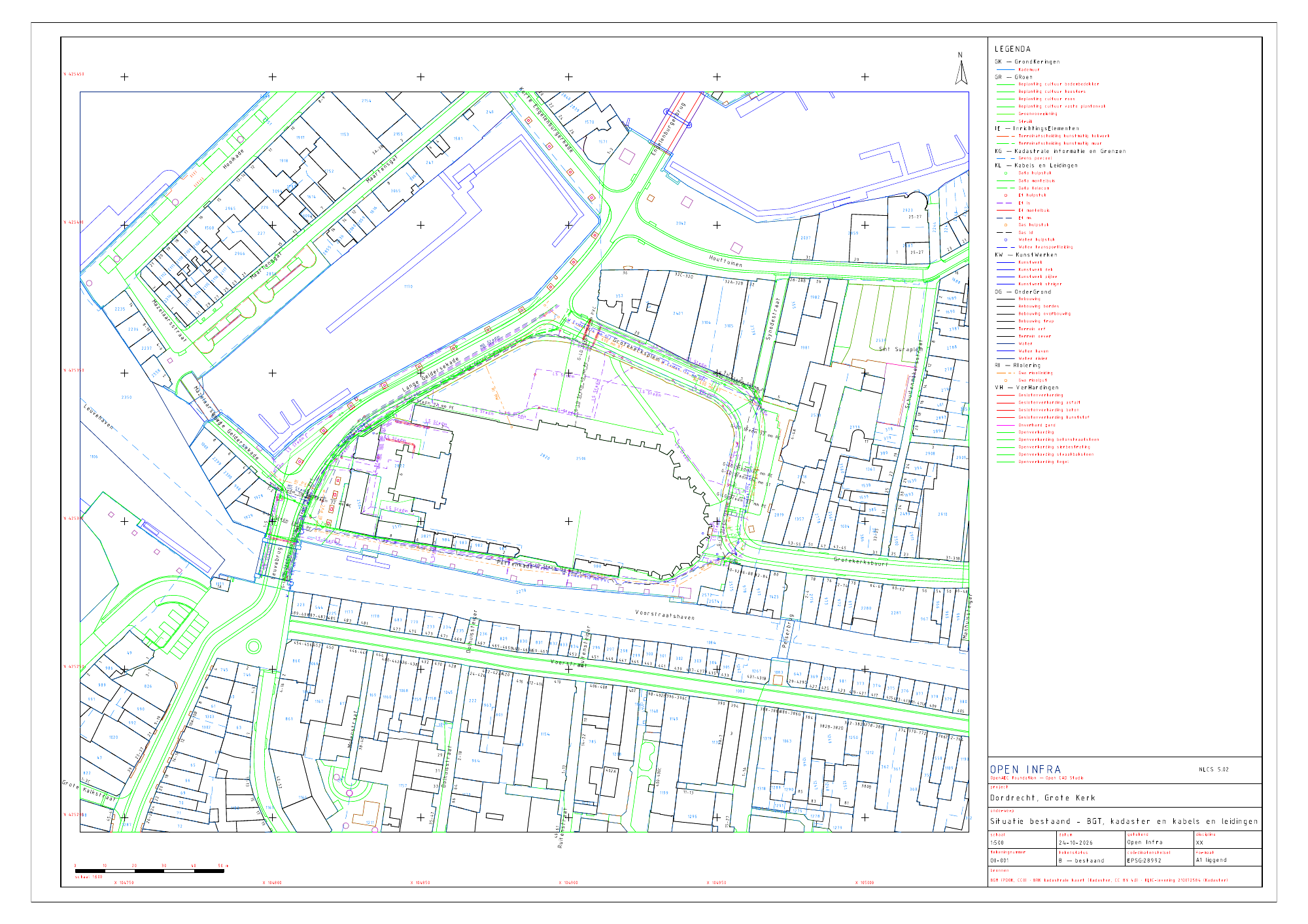
- Open CAD Studio: An independent community project that launches in less than a second and reads and writes native DWG and DXF files (R13 through R2018).
- Open BIM Studio: An open-source BIM modeling tool that lets you design parametric 3D building models, generate 2D floor plans, and export them directly to IFC.
- Open PDF Studio: A super-fast PDF viewer and editor, specifically designed to smoothly open, annotate, and measure quantities in large construction drawings.
- Open Planner Studio: A handy application for project planning, capacity management, and mapping critical paths on the construction site.
- Open CalcSheet Studio: An innovative tool for manual structural calculations based on plain text, including automatic IFC export.
Who is OpenAEC for?
OpenAEC is designed for professionals and organizations across the entire construction and infrastructure sector that are striving for digital independence and cost efficiency. The platform is specifically intended for:
- Technical Drafters & Designers: Who need fast, royalty-free 2D/3D CAD tools (Open CAD Studio) without mandatory cloud accounts.
- BIM Modelers & Architects: Who want to design parametrically based on pure OpenBIM standards (Open BIM Studio).
- Estimators & Project Managers: Who want to easily view, annotate, and digitally measure those complex construction drawings in PDF format (Open PDF Studio).
- Innovative IT managers & early adopters: Who want to regain control over their own project data and privacy-first document management (OpenAEC Docs).

The role of IDEOMA.
As an independent software consultant, IDEOMA sees firsthand the challenges that engineering and drafting firms face every day. The construction software market is dominated by a handful of vendors, leading to ever-rising subscription costs and mandatory cloud integrations. Your data is often locked in, and you keep paying.
At IDEOMA, we believe in freedom of choice. While GstarCAD already offers a powerful commercial alternative to AutoCAD with perpetual licenses, we see the OpenAEC open-source movement as the ultimate form of digital sovereignty. We are therefore closely monitoring this transition toward a transparent software landscape on behalf of our clients.
We don’t want to leave you to fend for yourself when switching to this open-source software. That’s why IDEOMA now offers its trusted support as a standalone service. What many satisfied customers already experience as standard with their paid software, you’ll now also receive for your free tools. We’re always here to help you with installation, optimal use, and maintenance. Feel free to contact us at any time for a no-obligation consultation.
Frequently Asked Questions (FAQ)
With traditional software (such as AutoCAD or Revit), the source code is proprietary and owned by a single vendor. You purchase a license to use the program, but you don’t actually own anything. With open-source software, the source code is completely public and freely accessible to everyone. A global community of developers, companies, and early adopters works together to build and improve the software. The major advantage of this is that the software remains completely free, there is no profit motive behind it, and you’ll never face vendor lock-in.
Yes, open-source software is generally more secure than proprietary software. Because the code is public, thousands of programmers around the world can review it, which means vulnerabilities are discovered and fixed immediately.
Furthermore, with the OpenAEC ecosystem, you don’t have to worry about the source. IDEOMA maintains close and personal contact with the founder of OpenAEC. We’re right at the source, closely monitoring developments, and can directly coordinate our clients’ questions or requests with the core team.
While AutoCAD is the traditional, paid standard for 2D and 3D drafting, OpenAEC (via Open CAD Studio) offers a free, open-source alternative. AutoCAD requires a hefty annual subscription fee. Open CAD Studio is 100% free and does not require any mandatory cloud accounts. In addition, AutoCAD carries the burden of over 40 years of legacy code. Open CAD Studio is built using modern programming languages (including Rust), launches in under a second, and runs smoothly on less powerful computers.
Both programs work with native .dwg and .dxf files. AutoCAD (and our commercial alternative, GstarCAD) currently still has the edge when it comes to highly specialized plug-ins, while Open CAD Studio excels in speed and free basic drafting.
The biggest differences lie in the revenue model, openness, and ongoing development. Revit is the global market leader in integrated 3D BIM design, but it requires a very expensive annual subscription and uses the proprietary .rvt file format.
OpenAEC (via Open BIM Studio) is completely free, runs more smoothly, and relies 100% on the open IFC standard, ensuring that your data always remains independent. However, Open BIM Studio is currently still in the development phase, while Revit is immediately ready for the most complex, large-scale multidisciplinary projects.
From a technological standpoint, it’s often even more advanced. Because the OpenAEC ecosystem was built from the ground up (using modern code such as Rust and full GPU graphics card acceleration), programs like Open CAD Studio literally launch in under a second and run more smoothly than heavy, outdated suites.
However, it’s important to be realistic: commercial software (such as Bluebeam, AutoCAD, and GstarCAD) has been under continuous development for over 40 years. OpenAEC is evolving rapidly, but is still in the beta/development phase. For basic drafting and openBIM coordination, its performance is already impressive, but for highly specific, specialized plugins, commercial software may currently offer more comprehensive capabilities. That is precisely why IDEOMA is closely monitoring this software: so that we can advise you exactly when an open-source tool is ready to fully replace your paid software.
November 2026
Developments are moving at lightning speed, but the software is currently in the beta/development phase (development releases). For everyday 2D drafting and OpenBIM coordination, the performance is already impressive. IDEOMA recommends exploring these tools alongside your current software packages (always test with copies of your files). We are closely monitoring the releases and will be happy to advise you when a tool is ready to fully replace your commercial software.
Although open-source software such as OpenAEC is the future and offers a fantastic, free foundation, choosing paid software (such as Bluebeam, GstarCAD, GstarBIM, or CYPE) ensures absolute reliability from day one. The added value of commercial software lies primarily in three areas:
- Fully production-ready: Commercial software has been continuously developed and extensively tested in millions of projects worldwide for decades. It is free of teething problems and immediately supports all conceivable advanced features and specialized plug-ins you need for your daily work.
- Direct guarantees and certification: Established software companies guarantee that their software runs reliably and complies with all industry standards. With advanced structural analysis software such as CYPE, you are also legally assured that all calculations are directly and officially certified in accordance with the latest Eurocodes.
- Backup Included: With commercial software, you’re not just buying the code—you’re also buying peace of mind. If a glitch occurs or a file won’t open, a professional help desk is immediately available to help you resolve the issue.
Open-source software is perfect for agencies that want to be pioneers, remain flexible, and avoid license fees. Paid software with a perpetual license is the smart choice if your business operations cannot tolerate any downtime or beta software. We’re happy to help you find the ideal balance between these two approaches.

Convinced?
Order our service and support subscription now and get started with OpenAEC. We’re happy to help you with the transition, and you can always contact us for questions, advice, training, administrative assistance, or other services.
This webpage was last updated on November 12, 2026. For the latest updates, visit the OpenAEC website.